

An ingrown toenail, clinically termed onychocryptosis, occurs when the lateral edge of a toenail plate penetrates the surrounding periungual skin fold, triggering localized pain, inflammation, and potential microbial infection. While severe or infected cases require immediate medical treatment from a podiatrist or physician, mild cases often respond favorably to conservative home care that relieves mechanical pressure and prevents secondary complications. This clinical guide from the nail care specialists at Nailuxe provides evidence-based techniques to manage mild ingrown toenails safely at home.
8 Effective Home Remedies for Ingrown Toenails
You can relieve mild ingrown toenail symptoms using 8 conservative, non-invasive remedies designed to reduce soft-tissue swelling, soften the nail plate, and protect against opportunistic bacterial pathogens.
Soak Your Foot in Warm, Soapy Water
Soaking your affected foot in warm, soapy water for 15–20 minutes, 3 to 4 times daily, softens the hardened nail plate and reduces localized swelling. Warm water enhances peripheral blood circulation to damaged tissue, while mild soap cleanses the periungual fold of environmental debris.
Fill a sanitized basin with warm water maintained between 37–40°C (99–104°F) and dissolve 2 tablespoons of liquid antibacterial soap or Epsom salts. Immerse the affected foot completely, gently pat the digit dry using a clean, lint-free towel, and ensure no residual moisture remains in the nail sulcus.
Try an Apple Cider Vinegar Soak
Diluted apple cider vinegar provides natural antimicrobial properties that combat surface bacteria, such as Staphylococcus aureus, while balancing epidermal pH. Its mild acetic acid concentration creates an environment unfavorable to microorganisms without damaging delicate tissue.
Combine 60 ml (0.25 cup) of raw apple cider vinegar with 1 liter (1 quart) of warm water at 37–40°C (99–104°F) in a clean basin. Soak your foot for 15 minutes once daily, rinse thoroughly with fresh water to remove acid residue, and dry the entire toe completely.
Use Dental Floss or Cotton to Gently Lift the Nail
Placing a small barrier beneath the offending nail corner lifts the edge away from the swollen lateral nail fold, encouraging outward growth above the skin line. Only perform this technique if the lateral nail border is clearly visible and pliable after a warm soak.
Use tweezers disinfected with 70% isopropyl alcohol to position a tiny wisp of sterile cotton or clean, unflavored dental floss under the ingrown edge. Replace the cotton or floss daily to avoid introducing bacteria, and discontinue the procedure immediately if pain or resistance increases.
Apply an Over-the-Counter (OTC) Antibiotic Ointment
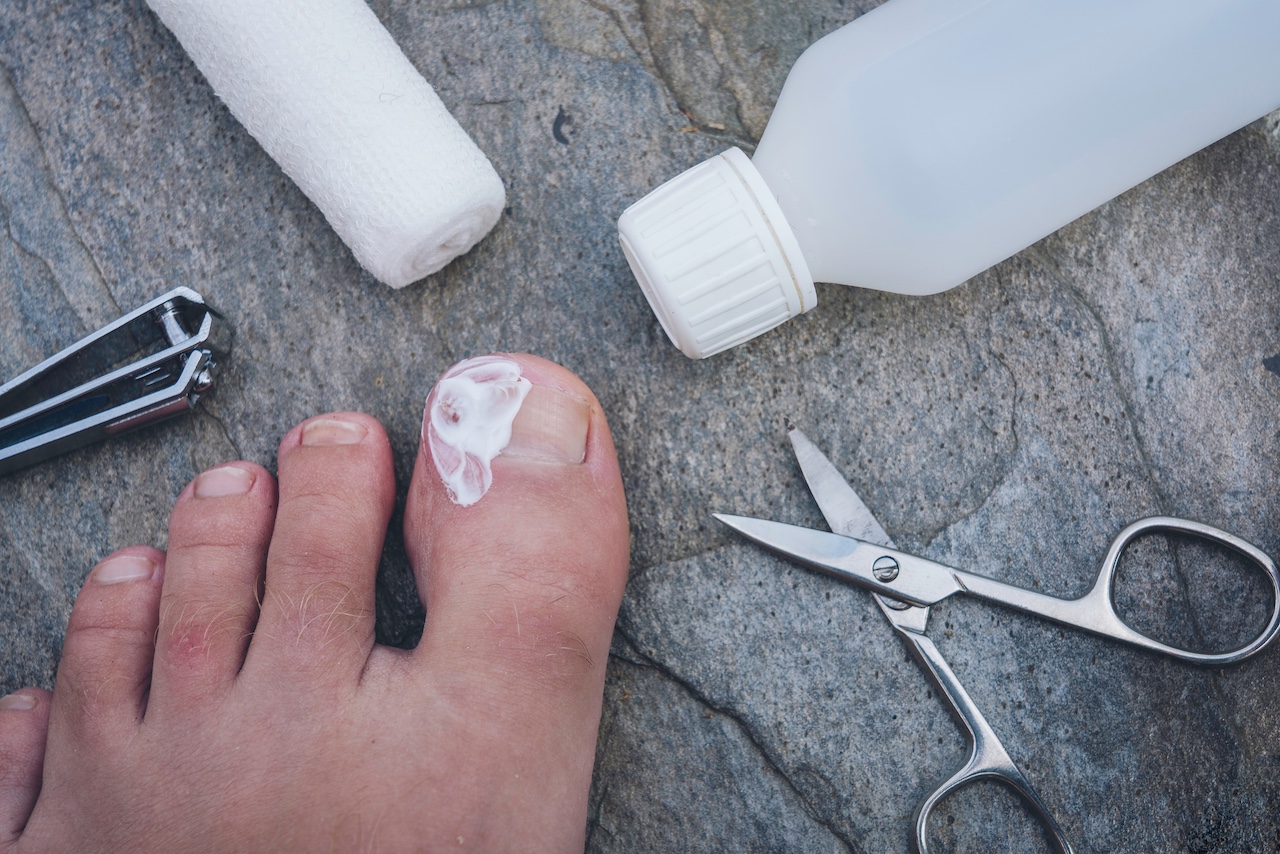
Applying an over-the-counter (OTC) antibiotic ointment establishes a barrier against opportunistic bacteria and maintains a moist wound-healing environment. Consistent topical treatment decreases infection risk while softening surrounding tissue.
Cleanse the affected toe, dry it thoroughly, and apply a thin layer of topical antibiotic ointment containing active ingredients such as bacitracin, polymyxin B, or neomycin. Protect the area with a sterile, breathable adhesive bandage, and reapply 1 to 2 times daily after washing.
Take OTC Pain Relievers for Discomfort
Over-the-counter oral analgesics, such as ibuprofen, acetaminophen, and naproxen sodium, alleviate throbbing pain and decrease surrounding soft-tissue inflammation. Controlling inflammatory prostaglandins allows you to maintain normal walking mechanics without aggravating the affected digit.
Follow the manufacturer’s dosage instructions carefully, taking ibuprofen (200–400 mg every 6–8 hours) or acetaminophen (500–1000 mg every 4–6 hours) with water. Consult a physician before starting non-steroidal anti-inflammatory drugs (NSAIDs) if you have hypertension, kidney dysfunction, or gastrointestinal ulcers.
Wear Comfortable, Open-Toed Shoes
Wearing wide-toed shoes or open-toed footwear eliminates external mechanical pressure against the distal phalanx, enabling swollen nail folds to decompress. Narrow footwear compresses the digits together, forcing the lateral nail spike deeper into sensitive periungual skin.
Choose sandals, open-backed clogs, or supportive walking shoes that offer at least 1.5 cm (0.5 in) of toe clearance beyond your longest toe. Avoid tight socks, pointed dress shoes, and high heels that shift body weight onto the forefoot during recovery.
Use a Toe Protector or Brace
Commercial silicone toe caps and elastic composite nail braces cushion the affected toe, redistributing direct pressure away from the inflamed lateral sulcus. These protective devices reduce shoe friction throughout daily activity.
Select medical-grade gel toe sleeves or flexible corrective tension strips from a licensed pharmacy, ensuring the protector fits comfortably without restricting digital blood flow. Wash reusable silicone caps daily in lukewarm soapy water, dry them fully, and inspect the toe regularly for skin maceration.
Keep Your Feet Clean and Dry
Strict foot hygiene controls moisture accumulation, preventing the proliferation of bacterial and fungal pathogens that complicate early nail irritation. Excess sweat softens the periungual skin, making it more vulnerable to micro-tears from adjacent nail edges.
Wash your feet daily with a gentle antibacterial soap and dry carefully, especially between the interdigital spaces. Wear moisture-wicking socks woven from breathable cotton, merino wool, or synthetic blends, changing them promptly if sweating occurs, and trim toenails straight across to prevent recurrence.

When to Stop Home Treatment and Seek Professional Help
Discontinue conservative home treatment and consult a licensed healthcare professional, such as a podiatrist or dermatologist, if symptoms do not improve within 3 to 5 days, or if signs of severe bacterial infection appear.
Signs of a Worsening Infection
Spreading redness, increasing localized heat, severe throbbing pain, and red streaks extending upward toward the ankle indicate spreading cellulitis requiring prescription medical treatment. Clinical infections can progress rapidly through subcutaneous tissue if left unmanaged.
Seek urgent medical evaluation if you develop systemic symptoms, such as a fever above 38°C (100.4°F), body chills, or tender lymph nodes in the groin. Medical practitioners can prescribe appropriate oral antibiotics and perform minor clinical procedures to drain infected tissue safely.
Severe Pain, Swelling, or Pus
The presence of purulent discharge (yellow or green pus), pronounced localized edema, and hypergranulation tissue signifies advanced tissue breakdown that home remedies cannot resolve. Hypergranulation tissue, or “proud flesh,” occurs when chronic inflammation prompts rapid capillary overgrowth along the nail border.
Do not attempt to lance blisters or excise hypergranulation tissue at home with unsterilized tools. A podiatrist can perform an in-office partial nail avulsion using local anesthesia to remove the offending nail sliver and relieve pressure permanently.
If You Have Diabetes or Poor Circulation
Individuals diagnosed with diabetes mellitus, peripheral neuropathy, or peripheral arterial disease must avoid self-treatment and consult a podiatrist immediately upon noticing any toe injury or nail deformity. Compromised microvascular perfusion impairs tissue oxygenation, substantially delaying wound healing.
Peripheral neuropathy often masks acute pain, allowing deep bacterial infections to develop unnoticed. Prompt medical oversight prevents minor ingrown toenails from progressing into serious diabetic foot ulcers, chronic osteomyelitis, or tissue necrosis.
The MobileNailNewyork Advantage: Professional Nail Service at Home in New York
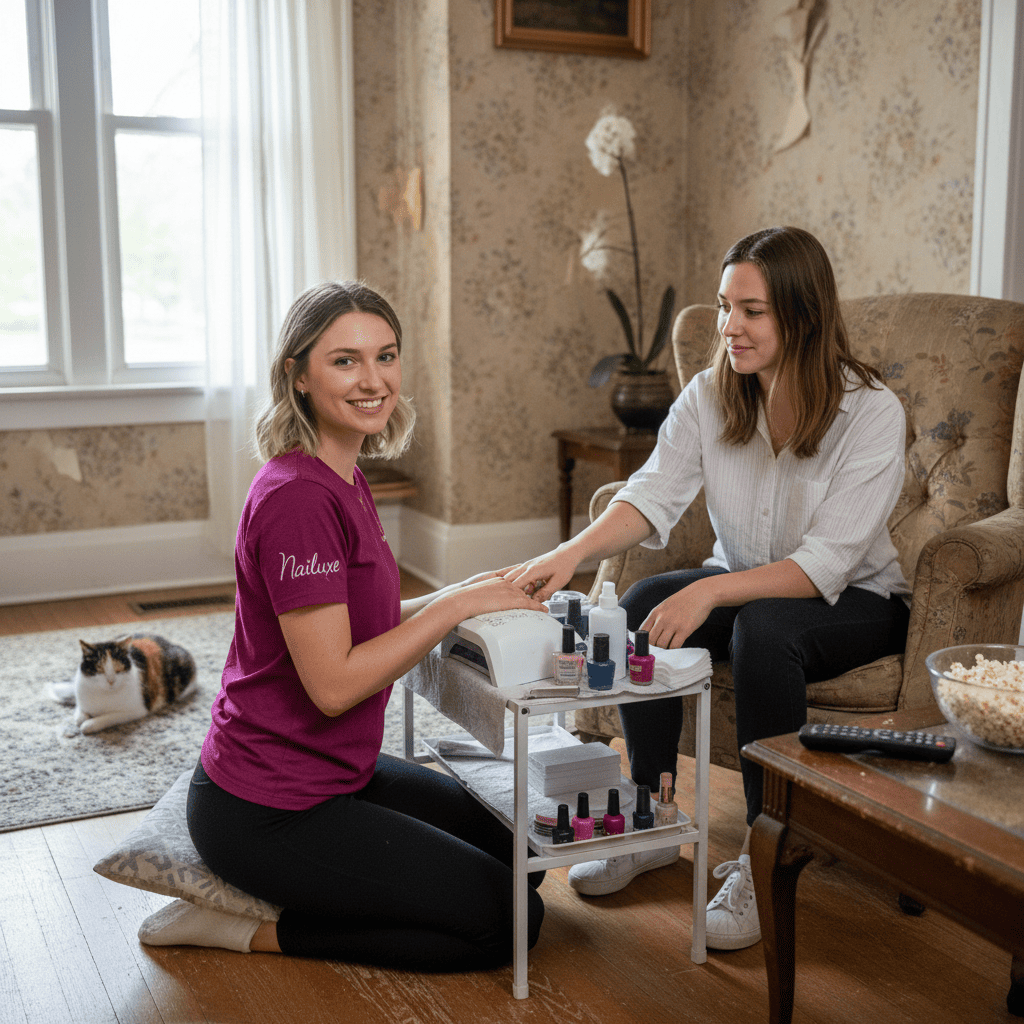
Nailuxe, a mobile nail service in New York City operating via mobilenailnewyork.com, delivers licensed cosmetic nail care directly to homes, offices, and venues across Manhattan, Brooklyn, Queens, The Bronx, and Staten Island. Every Nailuxe technician holds a New York State Nail Specialty License and completes 60 hours of Nailuxe Academy training in hygiene and ergonomics.
Nailuxe technicians provide cosmetic nail care and preventative grooming, strictly using metal tools steam-autoclaved at 121°C (250°F) for 30 minutes in sealed pouches opened in front of you. Technicians do not treat ingrown toenails, fungal infections, or open wounds; they evaluate nail health safely, adhere to non-invasive grooming protocols, and provide prompt referrals to medical specialists when clinical care is required.
How to Prevent Ingrown Toenails from Recurring
Preventing recurrent ingrown toenails requires establishing healthy nail clipping mechanics, maintaining appropriate nail length, and selecting footwear that respects natural foot anatomy.
Trim Your Toenails Straight Across
Cut your toenails straight across in a flat line, avoiding curved, rounded, or diagonal cuts into the lateral corners. Curved trimming encourages the distal lateral nail plate to spear outward into the periungual sulcus as the nail grows.
Allow the free edge of the toenail to extend approximately 1–2 mm (0.04–0.08 in) beyond the hyponychium to provide adequate mechanical clearance. Support healthy nail plate margins with gentle cuticle care using nourishing oils rather than cutting living epionychium tissue, and use dedicated, sharp toenail nippers.
Avoid Cutting Nails Too Short
Trimming toenails too short increases ingrown toenail recurrence because surrounding soft tissue expands upward over the trimmed nail bed. As the nail advances, it meets physical resistance from the distal skin fold, forcing sharp margins into sensitive dermis.
Maintain sufficient nail length so that a thin band of the white free edge remains visible across the entire distal margin. Over-shortening also weakens nail plate integrity, promoting micro-fractures and brittle nails that snag easily on socks and footwear.
Choose Footwear That Fits Properly
Selecting footwear with an anatomical, wide toe box eliminates mechanical compression across the first metatarsophalangeal joint and distal digits. Repetitive friction from poorly fitted shoes forces toenails into unnatural lateral growth planes.
Measure your feet annually and shop for footwear in the late afternoon when physiological fluid retention widens the feet. Ensure approximately 1.5 cm (0.5 in) of interior space between your longest toe and the shoe cap, avoiding pointed shoes or rigid athletic footwear that presses the toes together.
Schedule Regular Pedicures with MobileNailNewyork’s New York Service
Scheduling a regular mobile pedicure in New York with Nailuxe ensures professional, safe maintenance that prevents abnormal nail growth before complications occur. Routine cosmetic pedicures preserve nail geometry and support overall foot hygiene.
A licensed Nailuxe technician arrives at your home with single-use pedicure basin liners, water maintained at 37–40°C (99–104°F) (or 37°C / 99°F for diabetic clients), and autoclaved nippers to clip nails straight across with smoothed corners. Technicians never use razors or callus blades near the skin, providing safe, high-standard maintenance across all five New York City boroughs.
What Causes an Ingrown Toenail?
An ingrown toenail develops when mechanical pressure, improper maintenance, or genetic morphology directs the lateral edge of the hard nail plate into the soft periungual dermis.
Improper nail trimming—specifically curving edges downward or trimming below the lateral fold—serves as the primary behavioral cause. Constrictive shoes and tight socks compress the digits, while direct trauma from dropped objects or high-impact athletic routines, which requires specialized nail care for athletes, can damage the nail matrix.
Genetic factors also dictate nail thickness and curvature, predisposing individuals with pincer nail morphology to chronic ingrowth. In addition, secondary infections such as toenail fungus (onychomycosis) distort nail thickness and brittleness, increasing the likelihood of sharp fragments puncturing periungual skin.

Recognizing the Early Symptoms of an Ingrown Toenail
Identifying the early clinical symptoms of an ingrown toenail allows you to initiate conservative home care before secondary bacterial colonization creates a painful infection.
Initial Stage 1 symptoms present as localized tenderness, mild erythema (redness), and slight edema (swelling) along one or both lateral nail folds. The toe feels sensitive to direct pressure from shoes, and the immediate nail margin may feel warm upon palpation.
If left unmanaged, the condition advances to Stage 2, characterized by intense throbbing pain, glossy and taut skin, and clear serous drainage. Stage 3 presents severe pain, purulent discharge (pus), and hypergranulation tissue, signaling an established bacterial infection that requires immediate medical treatment.
Frequently Asked Questions About Ingrown Toenails
How long does it take for an ingrown toenail to heal at home?
A mild ingrown toenail typically heals within 1 to 2 weeks with consistent conservative home care, including warm soapy water soaks, gentle elevation, and pressure-free footwear. Healing duration varies based on initial tissue inflammation, personal hygiene, and footwear habits. If localized pain, swelling, or redness does not improve within 3 to 5 days, seek professional evaluation from a podiatrist.
Will an antibiotic ointment fix my ingrown toenail?
No, an over-the-counter antibiotic ointment will not fix the mechanical cause of an ingrown toenail. Topical antibiotic ointments help prevent or control superficial bacterial infections, but they cannot lift or reshape a nail plate that has penetrated surrounding skin. Use antibiotic ointments as a supportive measure alongside warm soaks, proper footwear, and straight nail trimming.
Can I remove an ingrown toenail myself?
No, you should never attempt to cut out or surgically remove an ingrown toenail yourself at home. Performing “bathroom surgery” with unsterilized tools introduces dangerous pathogens, causes deep soft-tissue lacerations, and often leaves a jagged nail spur that worsens inflammation. If an ingrown toenail requires partial or total nail removal, a licensed podiatrist or physician must perform the procedure using local anesthesia and surgical-grade sterilization.
What’s the difference between an infected and a non-infected ingrown toenail?
An infected ingrown toenail exhibits purulent discharge (pus), increasing localized heat, red streaks spreading up the foot, and severe throbbing pain, whereas a non-infected ingrown toenail presents with mild localized tenderness and slight swelling under pressure. An infection reflects active bacterial colonization requiring clinical evaluation and possible prescription oral antibiotics. A non-infected toe displays localized mechanical inflammation that generally responds well to early conservative home care.
Life in New York City moves fast, and Nailuxe ensures you enjoy meticulous, hygienic foot care in complete privacy without traveling to a busy salon. From Manhattan and Brooklyn to Queens, The Bronx, and Staten Island, our licensed technicians bring hospital-grade sterilization and premium mobile pedicures straight to your door.
Book your appointment with Nailuxe today to maintain healthy, beautifully groomed nails at home.
- Brand: Nailuxe
- Operations Base: 191 Hancock St, Brooklyn, NY 11216, United States (no walk-in service)
- Hotline: +1442-555-4022
- Email: [email protected]
- Website: https://mobilenailnewyork.com
- Hours: 07:00–21:00 (7 AM–9 PM), Monday to Sunday
- Service Area: Manhattan, Brooklyn, Queens, The Bronx, and Staten Island
