UV nail lamps present minimal risk to your health when operated properly, delivering ultraviolet exposure levels significantly lower than natural sunlight or commercial tanning beds. While gel manicures offer 2–3 weeks of chip-resistant wear that suits busy schedules, the curing process often raises safety questions among health-conscious clients. Nailuxe, a mobile nail service in New York City providing professional mobile gel manicure nyc across Manhattan, Brooklyn, Queens, The Bronx, and Staten Island, addresses these concerns with evidence-based dermatological insights.
Understanding the photochemistry, actual radiation output, and preventative techniques enables you to enjoy beautiful gel nails with complete confidence.
The Expert Consensus: Understanding the Risks of UV Nail Lamps
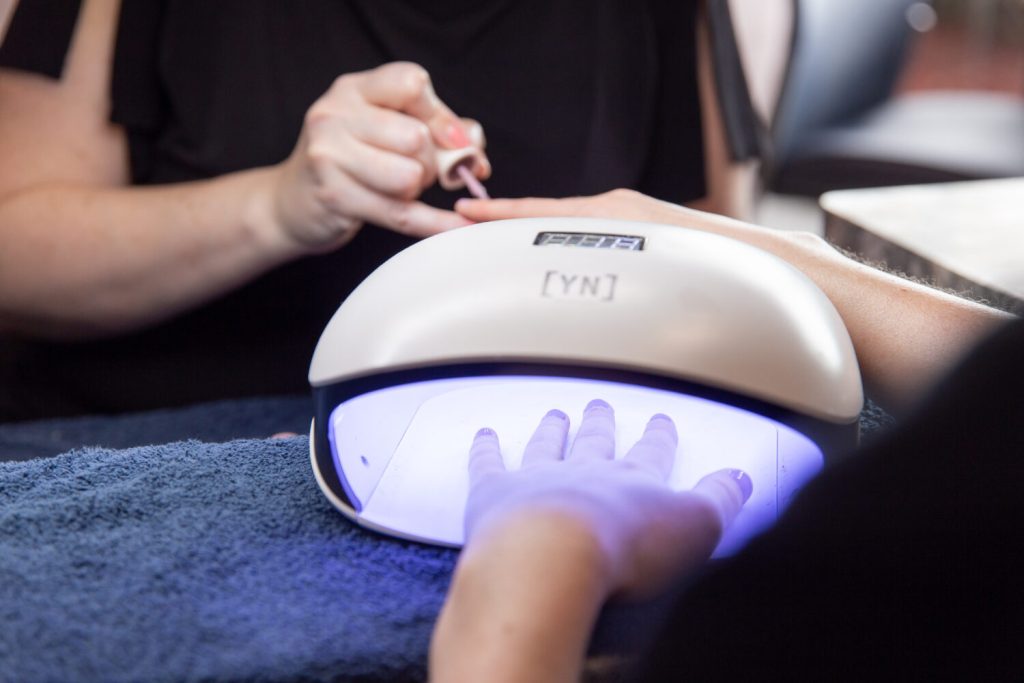
Medical professionals and dermatological organizations agree that UV nail lamps present an extremely low risk of skin cancer when used according to standard protocols. The American Academy of Dermatology confirms that while curing devices emit UVA radiation, your exposure duration remains remarkably brief. A typical gel manicure exposes hands to light for only 2–4 minutes total, divided into 30–60 second intervals per coat.
Research published in JAMA Dermatology demonstrated that bi-weekly gel manicures generate radiation doses insufficient to significantly increase skin cancer risk. The Skin Cancer Foundation classifies nail lamps as presenting moderate, manageable UV exposure—far lower than tanning beds—while still advising simple protective measures for optimal health.
Experts from Harvard Medical School note that brief, localized exposure limited strictly to the hands differs fundamentally from prolonged, full-body sun exposure. Following standard protective guidelines allows Nailuxe clients to enjoy long-lasting gel services with minimal health concerns.
How UV Nail Lamps Work and Why There Are Concerns
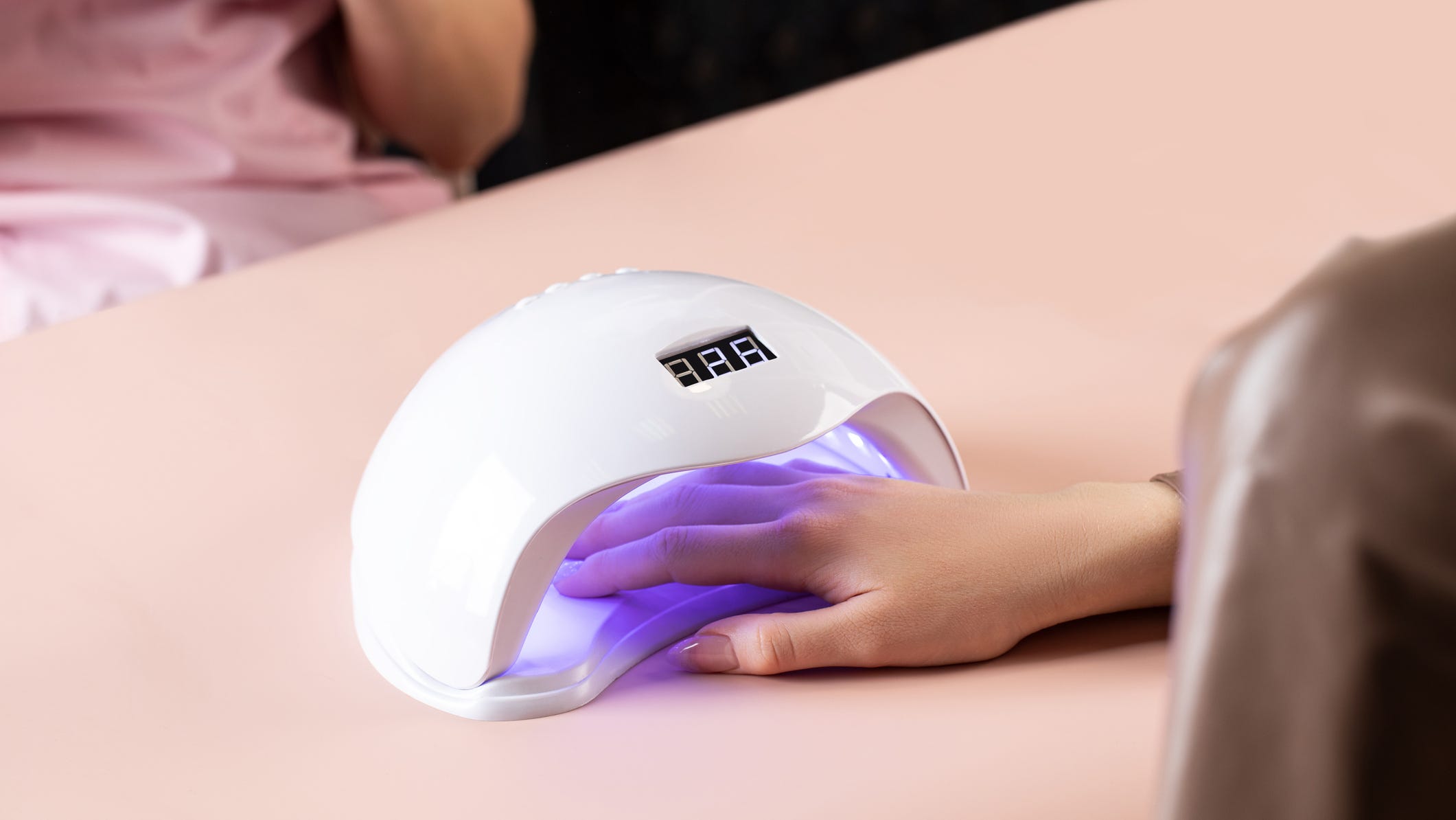
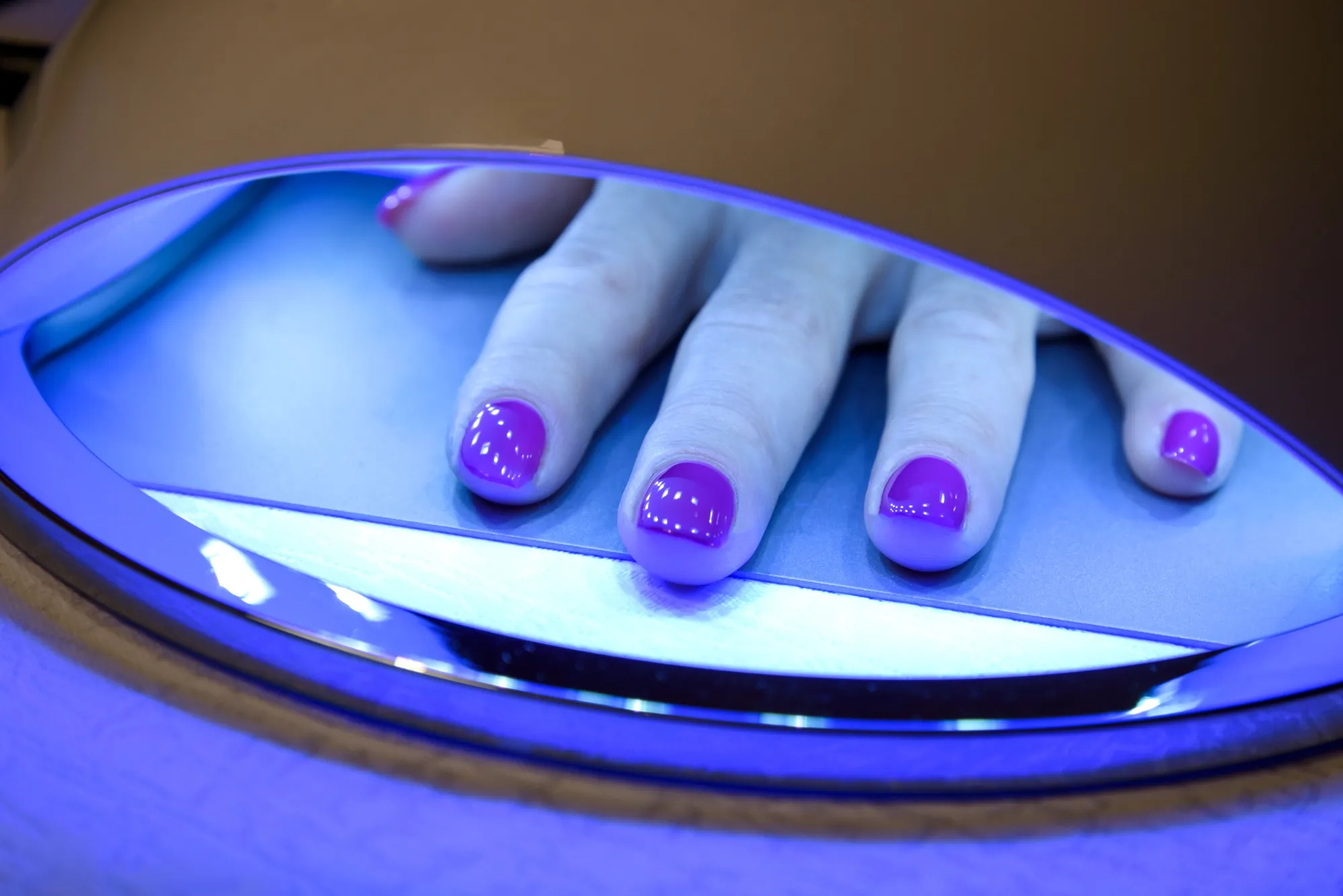
UV nail lamps harden gel polish through photopolymerization, a chemical reaction where ultraviolet light triggers photoinitiators to cross-link liquid monomers into an impervious plastic coating. These lamps emit UVA wavelengths between 315–400 nm (nanometers), which penetrate the deeper dermal layers of the skin without producing the immediate erythema or sunburns caused by UVB rays.
Manicure curing devices fall into two categories: traditional fluorescent UV lamps and modern LED lamps. Both systems emit UVA radiation, requiring identical protective precautions regardless of marketing claims suggesting LED systems are radiation-free.
Professional-grade 48 W LED lamps utilized by Nailuxe technicians operate at precisely calibrated wavelengths to polymerize gel efficiently. These units incorporate automated timers to prevent overexposure and feature interior mirrored reflectors that focus energy directly onto the nail plate rather than the surrounding skin.
The Link Between UV Radiation, DNA Damage, and Skin Cancer Risk
UVA radiation penetrates the dermis and generates reactive oxygen species that can induce cellular stress over extended periods. A 2023 cell-culture study published in Nature Communications showed that high-intensity UV nail dryers caused DNA damage in isolated human and rodent cells after 20 minutes of continuous radiation. However, researchers explicitly noted that isolated in vitro cells lack the protective outer layers and natural repair mechanisms of living human skin.
In actual clinical manicures, human hands experience brief, intermittent exposure separated by cooling rests between coats, allowing cellular repair enzymes to function normally. Lead author Dr. Maria Zhivagui cautioned against equating laboratory findings with real-world carcinogenesis, emphasizing that accumulated exposure from regular manicures remains a fraction of everyday outdoor sunlight.
UV vs. LED Lamps: Is One Safer for At-Home Manicures?
LED nail lamps are actually LED-UV hybrid devices that generate targeted UVA light via light-emitting diodes rather than fluorescent tubes. LED lamps cure gel coats in 30–60 seconds, whereas traditional fluorescent units require 2–3 minutes per layer.
Because LED units reduce curing duration by more than half, your total exposure time and cumulative UV dose decrease substantially. However, the Skin Cancer Foundation emphasizes that both technologies produce UVA rays and warrant the same physical safeguards. Nailuxe technicians rely on certified 48 W LED systems to deliver rapid curing with minimal cumulative exposure.
What Recent Research Says About UV Nail Dryer Safety
Clinical dermatology literature indicates that verified instances of skin cancer resulting directly from nail lamps remain exceptionally rare. A 2020 review evaluated isolated melanoma cases on the dorsal hands of long-term gel clients, concluding that confounding factors such as lifetime sun exposure, age, and genetic predisposition made direct causation impossible to establish.
The US Food and Drug Administration (FDA) evaluates UV nail lamps as low-risk cosmetic devices when operated according to established instructions. Dermatological consensus recommends simple preventative habits rather than avoiding gel manicures entirely.
How to Protect Your Skin During At-Home Gel Manicures in New York
Dermatologists recommend combining topical barriers and protective apparel to eliminate virtually all incidental UV exposure during your appointment. Implementing these evidence-based safety steps guarantees maximum skin protection while preserving the durability of your manicure.
Applying Broad-Spectrum Sunscreen Before Your Session
Applying broad-spectrum sunscreen with an SPF of 30 or higher provides effective defense against UVA radiation. Smooth the lotion over your hands, wrists, and fingers 20 minutes before your appointment to ensure thorough absorption into the skin barrier.
Select water-resistant mineral formulas containing zinc oxide or titanium dioxide, which immediately deflect UVA rays. Your technician cleanses the nail beds with an alcohol dehydrator before applying the base coat, ensuring oils from the sunscreen do not interfere with gel adhesion.
Using Fingerless UV-Protective Gloves
Fingerless UV-protective gloves block up to 99% of UVA radiation while keeping the nail plates exposed for precise application. Quality gloves feature certified UPF 50+ fabrics that shield the dorsum of your hands from repeated lamp exposures.
Nailuxe provides clean, protective gloves for clients during gel manicures. This physical shield is particularly beneficial for individuals receiving bi-weekly manicures, those with fair skin, or clients with family histories of skin cancer.
Safe Practices for Your MobileNailNewyork At-Home Manicure
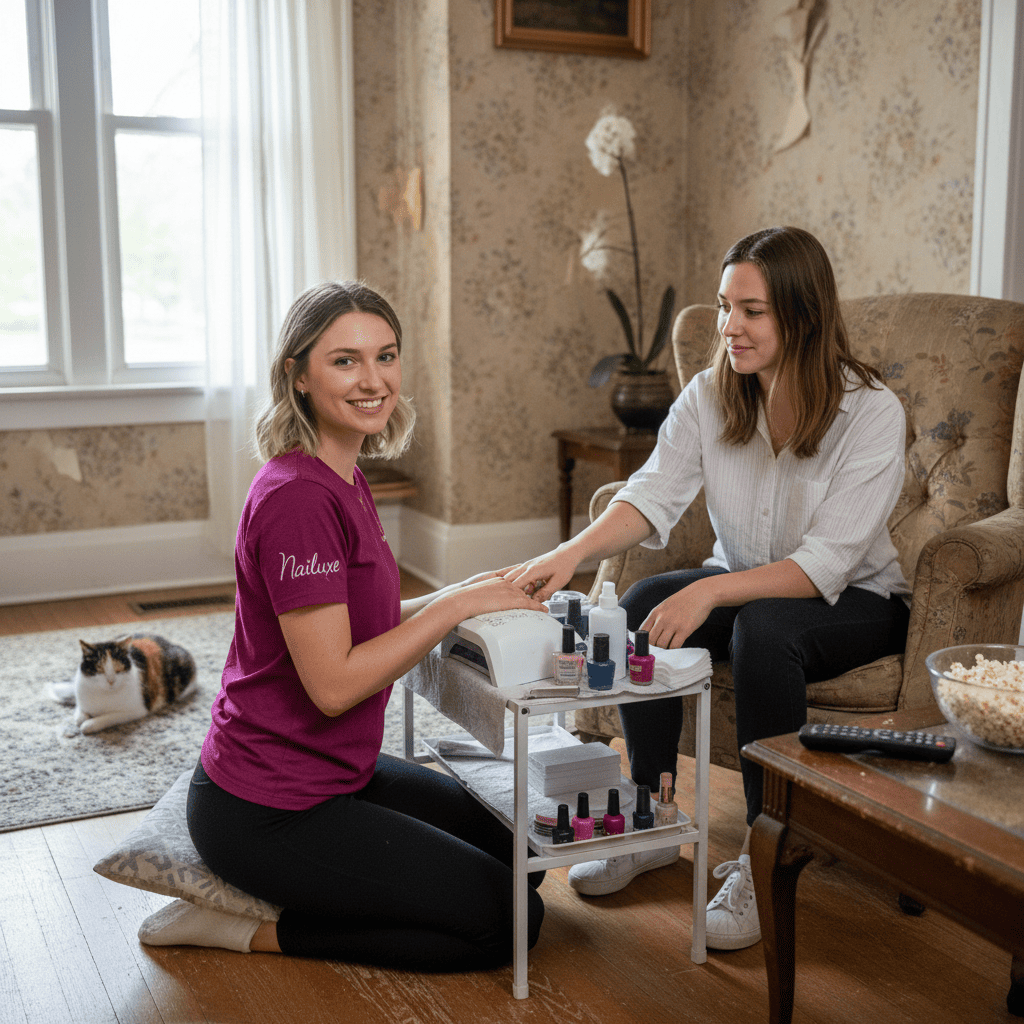
Nailuxe technicians follow strict safety and hygiene protocols during every mobile appointment, whether you book at home nails bronx, Manhattan, Queens, Brooklyn, or Staten Island. Your licensed technician uses calibrated 48 W LED lamps with automatic shut-off timers, maintains correct hand positioning, and provides resting intervals between curing steps. All metal implements are steam-autoclaved at 121°C (250°F) for 30 minutes at our Brooklyn operations base and opened from sealed pouches directly before your service.
Exploring Nail Options Without UV Light Exposure
Clients seeking lamp-free treatments can select high-performance alternatives that deliver durable results with zero ultraviolet light. These options are also ideal for restoring natural nail plates between enhancement cycles using nail strengtheners.
Nailuxe provides two proven lamp-free services:
- Classic Manicures: A traditional service including nail shaping, meticulous cuticle care, and professional nail lacquer that air-dries naturally in 15–20 minutes and wears for 5–7 days.
- Dip Powder Nails: A resilient system pairing cyanoacrylate resin with fine acrylic powder, hardened with an activator liquid rather than a lamp. Poured hygienically from single-use cups, dip powder delivers 3–4 weeks of chip-resistant durability.
The MobileNailNewyork Verdict: Enjoying Safe Gel Manicures At Home in New York
Scientific evidence confirms that gel manicures are safe when paired with brief exposure times, modern LED lamps, and basic safeguards like sunscreen and UPF gloves. Clients taking photosensitizing medications or those with questions regarding pregnancy nail care should consult their physician before starting a gel routine.
Nailuxe delivers licensed, salon-grade nail care directly to your living space under clean, controlled conditions. Regular check-ins by experienced technicians also help monitor natural nail health, making it easy to identify brittle nails or early nail fungus signs and receive personalized aftercare recommendations.
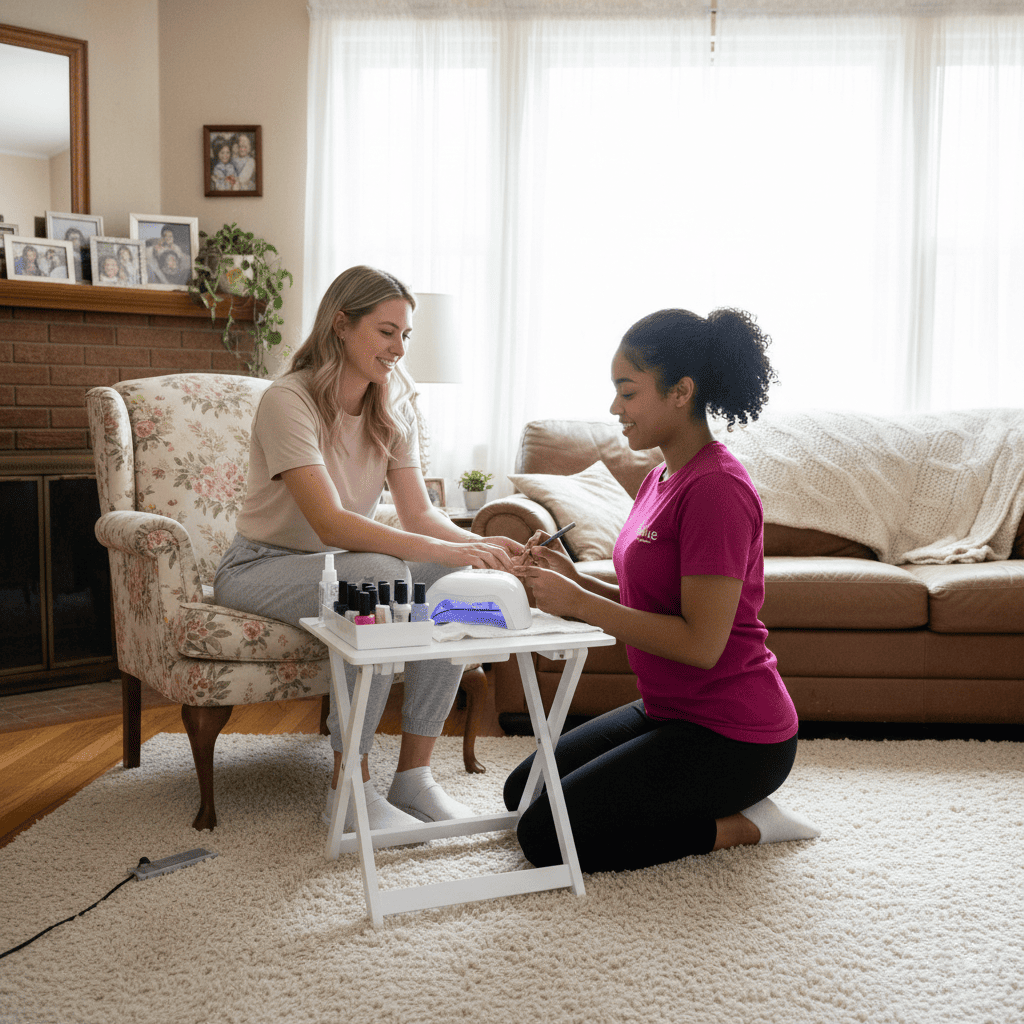
Life in New York City is fast-paced, and Nailuxe ensures you enjoy premium self-care without sacrificing your valuable time. Licensed technicians bring a hygienic, private salon experience directly to your home, office, or hotel suite across all five boroughs.
Book your appointment with Nailuxe today to refresh the health and beauty of your hands:
- Address: 191 Hancock St, Brooklyn, NY 11216, United States
- Hotline: +1442-555-4022
- Email: [email protected]
- Website: https://mobilenailnewyork.com
- Hours: 07:00–21:00 (7 AM–9 PM), Monday to Sunday
- Service Area: Manhattan, Brooklyn, Queens, The Bronx, Staten Island
