

Vertical ridges on your fingernails appear as raised lines running longitudinally from the cuticle to the free edge of the nail plate. Medically termed longitudinal ridging or onychorrhexis, these lines affect millions of adults across New York City and beyond. Understanding what causes vertical ridges helps you distinguish natural nail aging from systemic health conditions, protect your keratin structure, and maintain smooth, resilient nails.
What Are Vertical Nail Ridges and Should You Be Concerned?
Vertical nail ridges are lengthwise elevations extending from the proximal nail fold to the free edge of the keratin nail plate. In the vast majority of cases, these ridges are benign structural variations caused by gradual changes in the nail matrix rather than serious disease.
Normal vertical ridges develop symmetrically across multiple fingernails, deepen progressively with age, and cause no pain or color change. Human fingernails grow approximately 3.47 mm (0.14 in) per month, and aging naturally slows this cellular turnover, resulting in visible linear striations.
In contrast, sudden onset of deep ridges on a single digit, severe splitting at the free edge, pain, periungual inflammation, or co-occurring signs like white spots on nails indicate localized trauma, infection, or underlying systemic conditions requiring evaluation by a board-certified dermatologist.
Common Causes of Vertical Ridges on Nails
Vertical nail ridges stem primarily from natural aging, moisture depletion, nutritional shortfalls, systemic illnesses, and local physical trauma.
Normal Aging Process
Natural aging represents the primary cause of vertical nail ridges. As cellular turnover slows, the nail matrix produces less keratin protein and fewer natural lipid binders, causing the nail plate to thin and develop longitudinal grooves.
Clinical dermatology studies demonstrate that vertical ridging affects up to 60% of adults over age 60. Diminished microvascular blood circulation to the distal extremities further reduces nutrient delivery to matrix keratinocytes, producing pronounced textural changes over time.
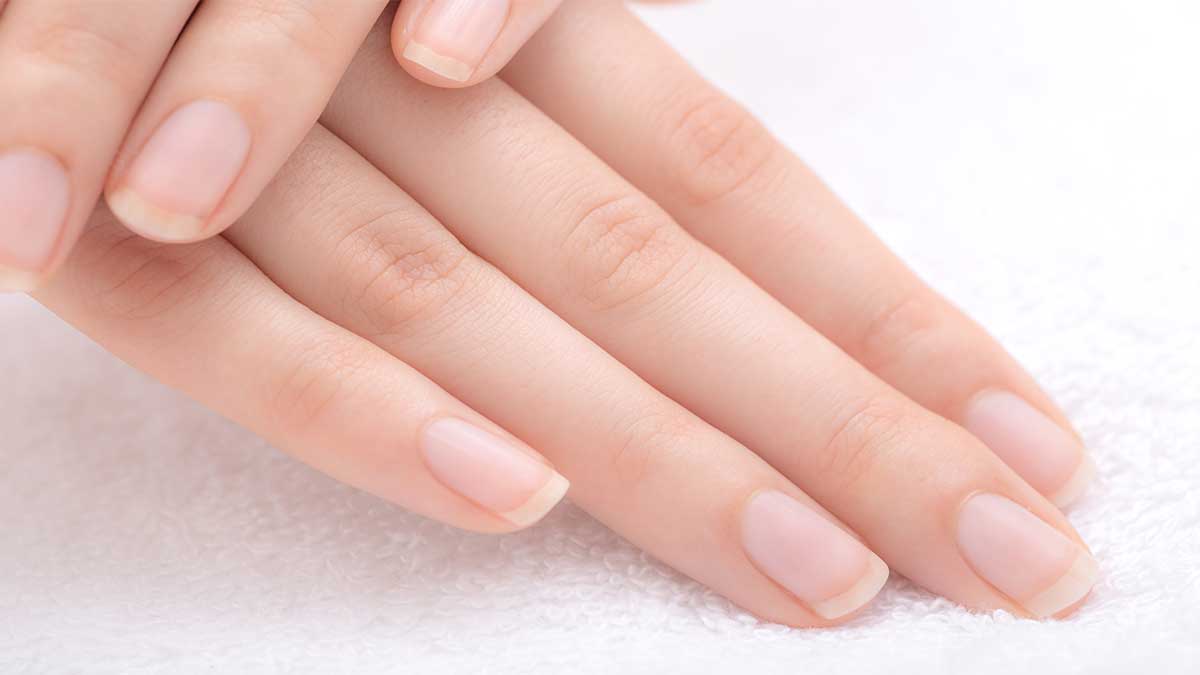
Dehydration and Lack of Moisture
Moisture depletion in the keratin nail plate causes brittle, uneven texture and accentuates longitudinal ridges. Fingernails require an optimal water content of 15% to 18% to maintain flexibility and tensile strength.
Environmental conditions in New York City, such as low ambient winter humidity, indoor heating, and continuous summer air conditioning, rapidly strip moisture from unprotected nail plates.
Frequent exposure to water, household cleaning solvents, or excessive handwashing repeatedly expands and contracts the nail layers. This cycle compromises intercellular lipid adhesion and triggers peeling edges, a frequent concern for individuals asking why are my nails peeling.
Nutritional Deficiencies
Deficiencies in key micronutrients impair keratinocyte proliferation within the nail matrix, causing longitudinal ridging and structural fragility.
Iron deficiency anemia diminishes oxygen delivery via hemoglobin to the nail matrix, leading to thinned, furrowed nail plates. Zinc is essential for protein synthesis and cellular division; inadequate zinc intake disrupts normal nail plate formation. B-complex vitamins, notably biotin (vitamin B7) and folate (vitamin B9), regulate amino acid metabolism crucial for nail elongation, and their absence results in brittle ridges. Insufficient dietary protein also limits the supply of sulfur-containing amino acids needed to form structural keratin.

Underlying Health Conditions
Underlying systemic illnesses can alter matrix cellular metabolism and present as pronounced vertical ridges.
Thyroid disorders, particularly hypothyroidism, decelerate metabolic processes, resulting in dry, brittle, and furrowed nails. Autoimmune disorders like rheumatoid arthritis induce chronic systemic inflammation that disrupts healthy nail formation. Psoriasis frequently targets the nail apparatus, producing longitudinal ridging, subungual hyperkeratosis, and localized pitting. In addition, peripheral vascular disease restricts capillary circulation to the fingers, depriving the nail unit of essential oxygen and micronutrients.
Nail Trauma or Injury
Direct trauma to the matrix tissue generates localized defects that grow outward as permanent or temporary vertical ridges. Mechanical damage often stems from aggressive cuticle pushing, habitual nail picking, heavy accidental impacts, or improper electric filing.
Chemical damage from repeated use of 100% acetone polish removers, harsh acrylic adhesives, or strong detergents breaks down the nail plate’s lipid bonds, weakening keratin fibers and making longitudinal furrows more prominent.
Vertical Ridges vs. Horizontal Ridges (Beau’s Lines): What’s the Difference?
The primary distinction between vertical and horizontal nail ridges lies in their direction, underlying cause, and clinical significance: vertical ridges run lengthwise and are generally benign, whereas horizontal ridges run crosswise and signal an acute interruption in nail matrix growth.
Vertical ridges extend from the cuticle fold to the free edge, developing slowly and symmetrically across multiple nails as part of the aging process or mild moisture loss. They rarely indicate severe pathology.
Horizontal ridges, known clinically as Beau’s lines, form transverse grooves spanning across the nail plate. These lines occur when high fever, severe systemic infection, major surgical trauma, or intense physical stress temporarily shuts down matrix cell division. Because fingernails grow at an average rate of 3.47 mm (0.14 in) per month, Beau’s lines take roughly 3 to 6 months to grow out on fingernails and up to 12 to 18 months on slower-growing toenails, which grow at roughly 1.62 mm (0.06 in) per month.
How to Improve the Appearance of Vertical Ridges on Your Nails
While natural aging ridges cannot be completely eliminated, targeted hydration, nutritional support, and safe nail grooming significantly smooth their appearance and prevent deep splitting.
Maintaining a Balanced Diet and Proper Hydration
Optimal nutrition provides the biochemical building blocks necessary for robust keratin synthesis and nail plate resilience.
Incorporate complete dietary proteins like eggs, wild fish, lean poultry, and legumes to provide essential cysteine and methionine. Add iron-rich foods, including spinach and lentils, alongside zinc sources like pumpkin seeds and whole grains to support cellular renewal. Biotin-rich foods such as eggs, almonds, and sweet potatoes strengthen brittle nail structures, serving as an effective weak nails treatment.
Maintain consistent systemic hydration by drinking at least 2 liters (68 fl oz) of water daily (approximately 8 glasses), adjusting for activity levels and seasonal humidity changes.

Moisturizing Your Nails and Cuticles at Home
Applying lipid-rich topical oils twice daily restores the natural protective barrier of the nail plate and softens the appearance of ridges.
Select botanical formulations containing jojoba oil, squalene, vitamin E, or pure lanolin, which possess molecular structures capable of penetrating the dorsal keratin layers. Massage oil directly into the eponychium and nail bed morning and night.
For an intensive overnight treatment, apply a generous layer of nourishing balm over the hands and wear soft cotton gloves while sleeping to trap moisture and enhance nail flexibility.
The MobileNailNewyork Approach: Gentle At-Home Nail Services in New York
Nailuxe, a mobile nail service in New York City, brings licensed technicians directly to your residence, office, or hotel in Manhattan, Brooklyn, Queens, The Bronx, and Staten Island from 07:00 to 21:00 (7 AM–9 PM), seven days a week. For clients with vertical ridges or thinning nail plates, our licensed technicians avoid aggressive electric drills and harsh chemicals. Every visit uses metal tools steam-autoclaved at 121°C (250°F) for 30 minutes, single-use 240-grit buffers, and nourishing cuticle treatments. Whether you need quiet care in Brooklyn or at home nails Staten Island, Nailuxe provides gentle, restorative nail care backed by the Nailuxe 7-Day Care Promise.
Lightly Buffing the Nail Surface
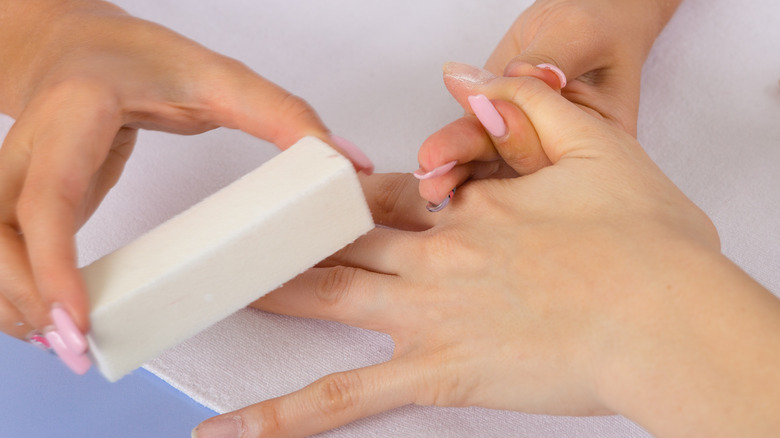
Gentle buffing temporarily levels the raised peaks of vertical ridges, but the technique must be performed with caution to prevent thinning the nail plate.
Use an ultra-fine abrasive buffer rated at 240 grit or higher. Buff lightly across the nail in a single direction rather than applying a harsh, back-and-forth sawing motion. Limit buffing sessions to once every 4 weeks.
Over-buffing removes the protective dorsal keratin layer, leading to increased fragility and splitting. Always finish with a nourishing ridge-filling base coat and cuticle oil to seal the surface.
When to Consult a Doctor About Ridges in Your Fingernails
Consult a board-certified dermatologist or physician whenever vertical ridges are accompanied by pain, sudden morphological shifts, or systemic symptoms.
Seek medical care if ridges coincide with yellow, brown, or green discoloration beneath the plate, as these are prominent nail fungus signs that require prescription antifungal intervention. Deep furrows appearing abruptly on a single digit often indicate localized matrix cysts or trauma.
Pain, redness, or purulent drainage around the cuticle points to active periungual infection. Structural changes like spoon-shaped nails (koilonychia) or clubbing (curved enlargement of the fingertips) warrant prompt evaluation for cardiovascular, pulmonary, or chronic metabolic disorders.
Frequently Asked Questions About Vertical Nail Ridges
What Do Ridges in Your Fingernails Mean?
Vertical ridges in your fingernails most commonly indicate natural aging and moisture loss in the keratin matrix. As cellular regeneration slows over time, lipid production declines, producing uniform longitudinal lines from cuticle to tip. If ridges develop suddenly, cause pain, or accompany color changes, they may indicate nutritional shortfalls, matrix trauma, or systemic health conditions.
Can Vitamin Deficiencies Cause Ridges in Fingernails?
Yes, deficiencies in iron, zinc, biotin (vitamin B7), and folate (vitamin B9) can cause vertical nail ridges. These micronutrients regulate cellular division and protein synthesis in the nail matrix. Correcting these deficiencies through a balanced diet or medical supplementation restores normal keratin production as fresh nail grows out over 3 to 6 months.
How Can MobileNailNewyork’s At-Home Care in New York Help?
Nailuxe provides gentle, restorative at-home nail care across all five New York City boroughs to safely manage and smooth vertical ridges. Our licensed technicians conduct a detailed nail health assessment, utilize steam-autoclaved tools at 121°C (250°F), and employ gentle 240-grit micro-buffing paired with non-toxic, nutrient-rich conditioning treatments. This professional care enhances the appearance of ridged nails without thinning the natural nail plate.

Life in New York City is always fast-paced, and Nailuxe ensures you enjoy premium, hygienic self-care without losing valuable time. Licensed technicians bring a complete, sterile studio directly to your residence, hotel, or office across all five boroughs. Experience healthy, beautiful natural nails on your schedule.
Book your at-home appointment with Nailuxe today to restore strength and smoothness to your nails.
- Brand: Nailuxe
- Operations Base: 191 Hancock St, Brooklyn, NY 11216, United States (no walk-in service)
- Hotline: +1442-555-4022
- Email: [email protected]
- Website: https://mobilenailnewyork.com
- Hours: 07:00–21:00 (7 AM–9 PM), Monday to Sunday
- Service Area: Manhattan, Brooklyn, Queens, The Bronx, Staten Island
