

Brittle fingertips affect approximately 20% of the population, particularly adults over 50 years of age. You face daily functional challenges when keratin plates split, flake, or crumble. Learn why are my nails peeling to understand how moisture loss and keratin degradation compromise structural integrity. This guide delivers targeted protocols to restore plate thickness and prevent breakage for New York residents seeking salon-grade care at home.
How to Treat Brittle Fingertips: At-Home Remedies and MobileNailNewyork’s Professional Tips
Treating brittle fingertips requires restoring hydration, reinforcing keratin bonds, and shielding the plate from chemical exposure. Clinical dermatology research confirms that combining daily moisture with protective barriers yields measurable improvements in plate elasticity and tensile strength.
Moisturize Your Fingertips and Cuticles
Daily hydration restores the natural moisture balance necessary to stop nail splitting and peeling. Healthy keratin plates contain approximately 18% water content, and levels dropping below 16% cause severe brittleness. Understanding cuticle oil benefits helps you select lipid-replenishing formulas containing jojoba oil, squalane, and vitamin E. Massage a drop into each nail plate and surrounding eponychium twice daily to seal the intercellular matrix. High-performance moisturizers featuring ceramides, shea butter, and hyaluronic acid create an effective lipid barrier against moisture loss.
Indoor radiator heating lowers ambient humidity to 10–20% during New York winters, which accelerates plate dehydration. Run a cool-mist bedroom humidifier and apply an occlusive ointment before sleeping to maintain nighttime hydration.
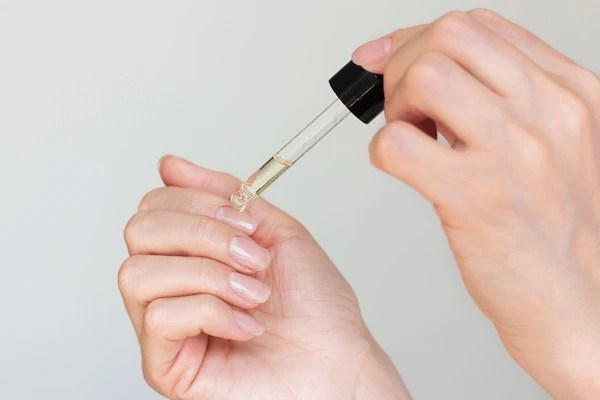
Apply a Strengthening Treatment
Targeted strengthening treatments reinforce fragile keratin layers with structural proteins and cross-linking agents. Apply a specialized nail hardener formulated with hydrolyzed keratin, calcium, and silica once weekly to clean, dry nails. Choose formaldehyde-free formulas to prevent allergic contact dermatitis, excessive rigidity, and nail bed separation (onycholysis). Remove and reapply the treatment every 7–10 days using an acetone-free solvent to avoid brittle buildup while preserving natural flexural strength.
Discontinue treatment immediately if your nails become excessively stiff or display hairline fractures, and switch to intensive hydrating balms.
Improve Your Diet and Nutrition
Nutritional support repairs brittle keratin plates from within by supplying essential micronutrients to the nail matrix. Consuming nutrient-dense foods for strong nails provides the biochemical building blocks for keratin synthesis. Daily oral biotin (vitamin B7) supplementation increases plate thickness by approximately 25% over a 6-month period.
Essential micronutrients for nail plate synthesis include:
- Biotin: Ingest 2.5 mg daily to stimulate matrix keratinocytes, reduce longitudinal splitting, and increase nail firmness.
- Protein: Consume 0.8 g per kilogram (0.36 g per pound) of body weight daily from lean sources such as poultry, eggs, and legumes to fuel keratin production.
- Iron: Maintain a daily intake of 18 mg for women and 8 mg for men to prevent iron-deficiency anemia, which induces brittle, spoon-shaped plates (koilonychia).
- Zinc: Consume 8–11 mg daily to support cellular division in the nail bed and prevent transverse white lines (leukonychia).
Incorporate nutrient-dense whole foods into daily meals, including wild salmon, avocados, walnuts, spinach, and pumpkin seeds.
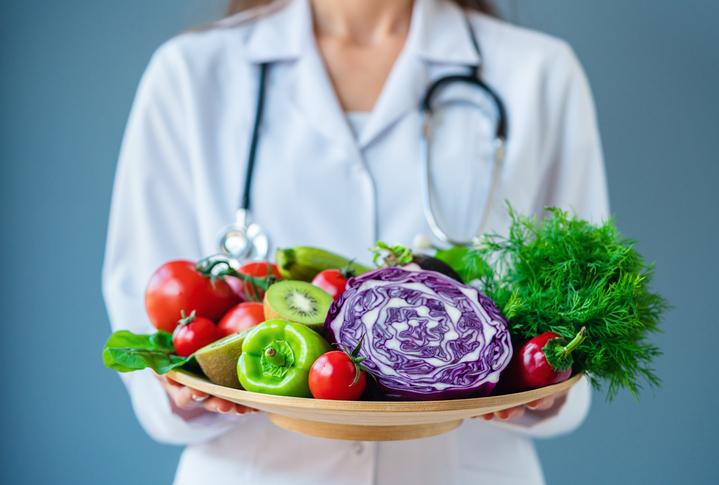
Protect Your Hands from Water and Chemicals
Physical barriers protect keratin bonds against the destructive expansion and contraction cycles caused by frequent water exposure. The repetitive wetting and drying of hands weakens the intercellular cement between keratin layers, leading to onychoschizia (distal nail splitting). Wear durable nitrile gloves whenever washing dishes, handling household detergents, or performing cleaning tasks. Nitrile provides superior chemical resistance compared to latex while eliminating allergy risks. Use soft, cotton-lined gloves during prolonged cleaning to absorb perspiration and prevent epidermal irritation.
Apply a protective base coat before encountering cleaning solutions, chlorinated water, or urban winter de-icing salts common across New York City.
Practice Gentle Fingertip Care
Gentle manicuring practices preserve the structural integrity of natural nail edges and cuticles. File nail edges in one single fluid direction using a high-grit glass or fine emery board (240 grit or higher) to avoid micro-fissures. Never use bidirectional sawing motions, which shred delicate keratin tips. Trim nails immediately after washing when plates are softened and less prone to shattering. Cut straight across the free edge, then gently round the lateral corners.
Keep the eponychium intact by gently easing cuticles back with a rubber-tipped pusher instead of clipping live tissue. Use non-acetone polish removers enriched with glycerin, panthenol, and vitamin E, limiting color changes to once per week.
Preventing Brittle Fingertips: The Do’s and Don’ts for Daily Care
Preventing nail brittleness requires establishing consistent protective habits and eliminating everyday mechanical stresses.
Do: Keep Your Tips Trimmed and Filed
Maintaining a short, uniform length minimizes mechanical leverage that causes edge fractures and tears. Keep your free edge extending approximately 3–5 mm (0.12–0.20 in) past the fingertip to balance utility with protection. File nails every 7–10 days into a soft squoval or oval contour that follows the natural curvature of the fingertip. This geometric shape disperses operational pressure evenly across the stress area of the plate.
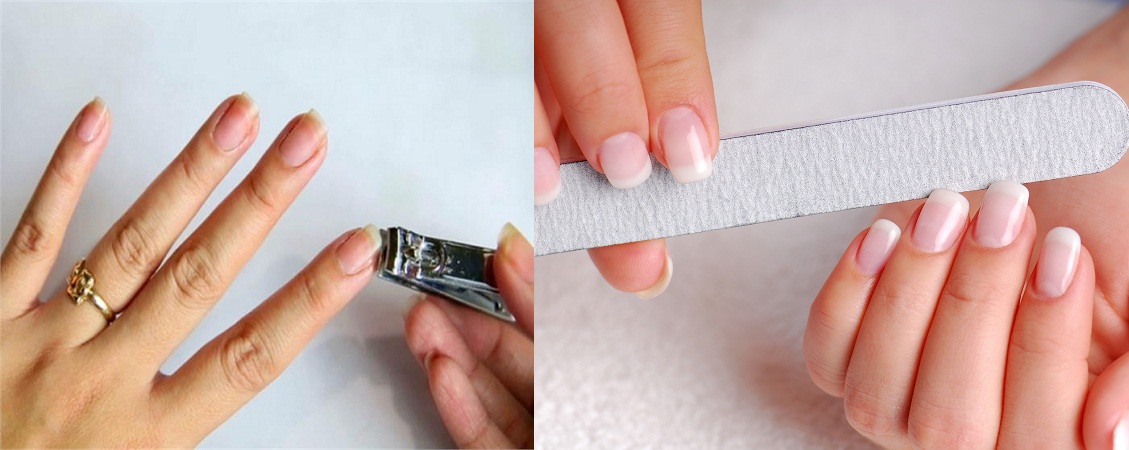
Do: Eat a Balanced Diet Rich in Biotin
Eating a balanced diet abundant in biotin and micronutrients strengthens the matrix tissue that produces the nail plate. Include whole-food biotin sources in your daily regimen, such as cooked eggs, wild salmon, avocados, sweet potatoes, and almonds. One whole egg delivers roughly 10 mcg of biotin, while 28 g (1 oz) of raw almonds provides 1.5 mcg. A 85 g (3 oz) portion of cooked salmon provides 5 mcg of biotin alongside anti-inflammatory omega-3 fatty acids.
Construct balanced daily meals featuring spinach-mushroom frittatas, avocado salmon salads, and almond-butter toast to maintain consistent nutrient availability.
Don’t: Use Your Fingertips as Tools
Using nail plates as mechanical tools inflicts acute structural trauma that causes micro-cracks and delamination. Natural human nail plates withstand approximately 2.1 kg/cm² (30 lb/in²) of force before cracking or detaching from the nail bed. Carry dedicated utility tools, including letter openers, scissors, staple pullers, and small multi-tools, to open boxes and scrape labels.
Use your knuckles or an electronic stylus when operating transit ticket machines, automated tellers, and touchscreens throughout New York City.
Don’t: Overuse Harsh Polish Removers
Frequent contact with harsh solvents strips structural lipids and moisture from the dorsal nail plate. Pure acetone rapidly dissolves both polish pigments and the natural lipid layers that bind keratinocytes together. Choose conditioning acetone-free removers based on ethyl acetate or butyl acetate formulated with added moisturizers. Limit removal treatments to a maximum of once every 7–10 days. Remove salon enhancements by soaking cotton pads and applying them gently with foil wraps for 10–15 minutes rather than scraping forcefully against dry plates.
Don’t: Pick at Your Cuticles
Picking or cutting cuticles destroys the protective anatomical seal that prevents pathogens from entering the nail matrix. Damage to the cuticle barrier exposes germinal tissue to chronic paronychia, bacterial infections, and permanent plate dystrophy. Apply nourishing cuticle oil and use a smooth pusher to groom pliable cuticles immediately after bathing. Use stress-relief tools, silicone rings, or anti-biting botanical coatings if you experience compulsive cuticle manipulation.
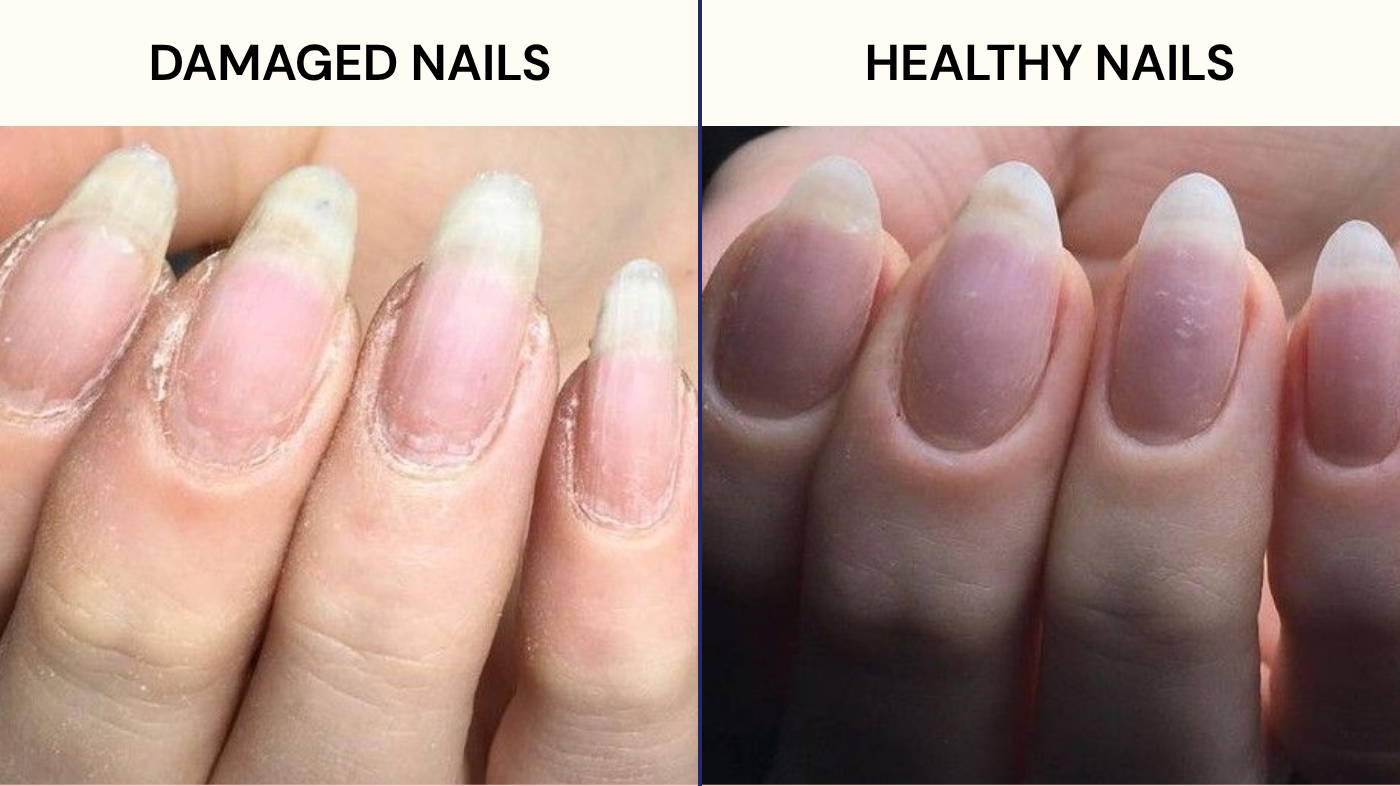
Frequently Asked Questions About Brittle Nails
Common questions regarding brittle nail causes, prevention, and medical care are answered below.
What Are the Main Causes of Brittle Fingertips?
The main causes of brittle fingertips are environmental dehydration, frequent chemical exposure, age-related protein decline, and nutritional deficiencies.
Environmental Factors: Repetitive water contact, harsh cleaning agents, alcohol sanitizers, and dry winter heating strip natural sebum and moisture from the nail plate.
Aging: Slower cellular turnover after age 50 decreases keratin production, leading to thinner and more fragile plates.
Health Conditions: Systemic conditions, including thyroid disorders, iron-deficiency anemia, psoriasis, and diabetes, impair matrix keratinization.
Nutritional Deficiencies: Insufficient dietary intake of biotin, iron, complete protein, or zinc compromises nail plate density.
When Should I See a Doctor for Brittle Fingertips?
You should see a doctor or board-certified dermatologist if brittle nails appear suddenly with unexplained fatigue, severe horizontal ridges, or signs of localized infection.
Schedule a clinical consultation if you observe any of the following signs:
- Structural Distortions: Deep horizontal depressions (Beau’s lines), vertical splitting reaching the matrix, dark linear streaks, or separation of the plate from the nail bed (onycholysis).
- Persistent Non-Response: Failure to show improvement after 6 months of disciplined at-home moisturizing and nutritional supplementation.
- Infection Symptoms: Localized swelling, throbbing pain, persistent erythema, or purulent discharge surrounding the lateral nail folds.
The MobileNailNewyork Difference: Professional At-Home Service in New York for Strong, Healthy Fingertips
Nailuxe, a mobile nail service in New York City, brings licensed nail technicians directly to your door across Manhattan, Brooklyn, Queens, The Bronx, and Staten Island. Operating daily from 07:00 to 21:00, our specialists deliver customized restorative treatments, including natural manicures and a soothing at home pedicure nyc.
Every appointment adheres to hospital-grade sterilization standards: metal tools are steam-autoclaved at 121°C (250°F) for 30 minutes in sealed pouches and opened in front of you, with single-use files and buffers. Our technicians assess nail plate health and formulate non-toxic, conditioning care plans to restore brittle fingertips. Book your appointment across all five boroughs, including dedicated mobile nails manhattan services, at mobilenailnewyork.com or call +1442-555-4022.
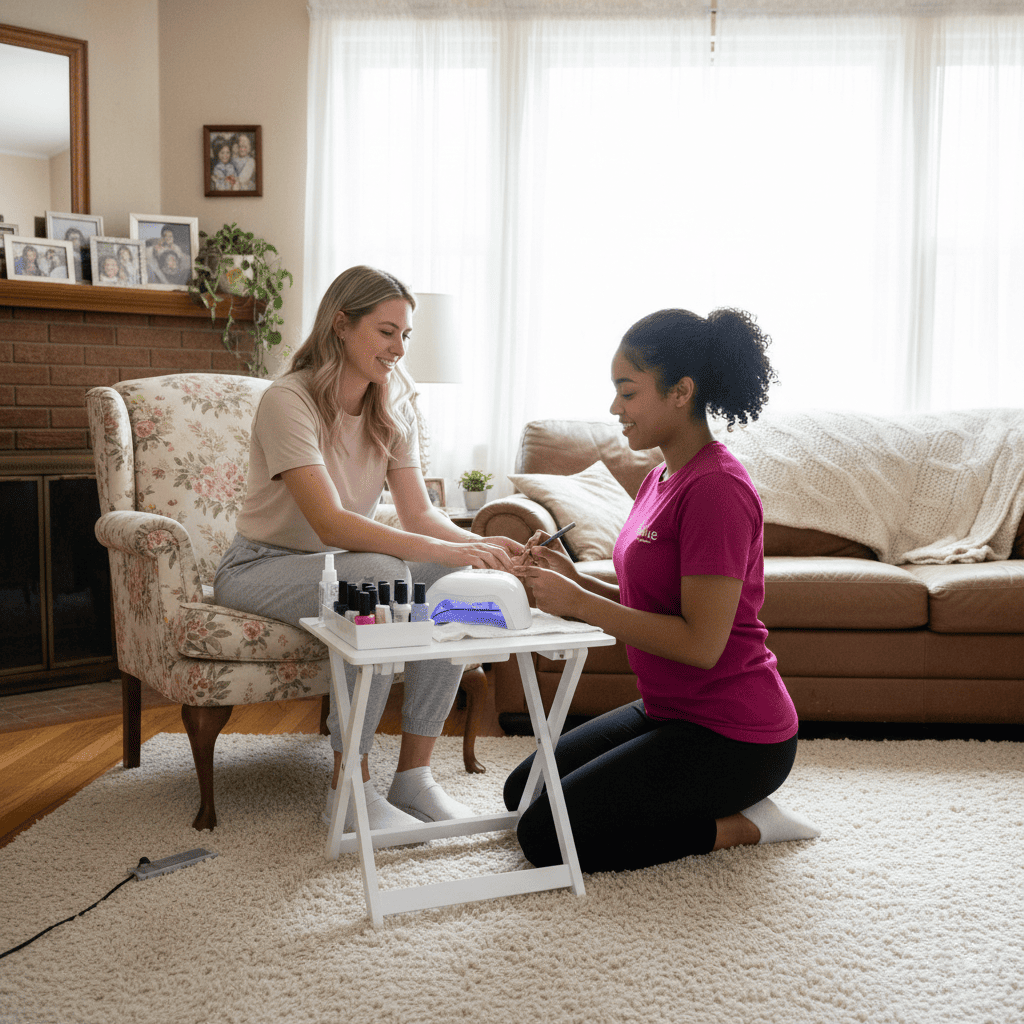
Life in New York City moves quickly, and you deserve premium, hygienic nail care without spending hours traveling to a salon. Experience safe, salon-grade nail restorative treatments delivered directly to your home, office, or hotel suite.
Book your appointment with Nailuxe today to restore strength and radiance to your nails:
- Brand: Nailuxe
- Operations Base: 191 Hancock St, Brooklyn, NY 11216, United States (no walk-in service)
- Hotline: +1442-555-4022
- Email: [email protected]
- Website: https://mobilenailnewyork.com
- Hours: 07:00–21:00 (7 AM–9 PM), Monday to Sunday
- Service Area: Manhattan, Brooklyn, Queens, The Bronx, Staten Island
